

Program Notes: Marin Alsop Conducts Tchaikovsky, Bernstein, Prokofiev
Superstar Conductor Marin Alsop joins the Seattle Symphony for a program of orchestral works all inspired by Shakespeare's Romeo and Juliet (June 15 & 17, 2023).
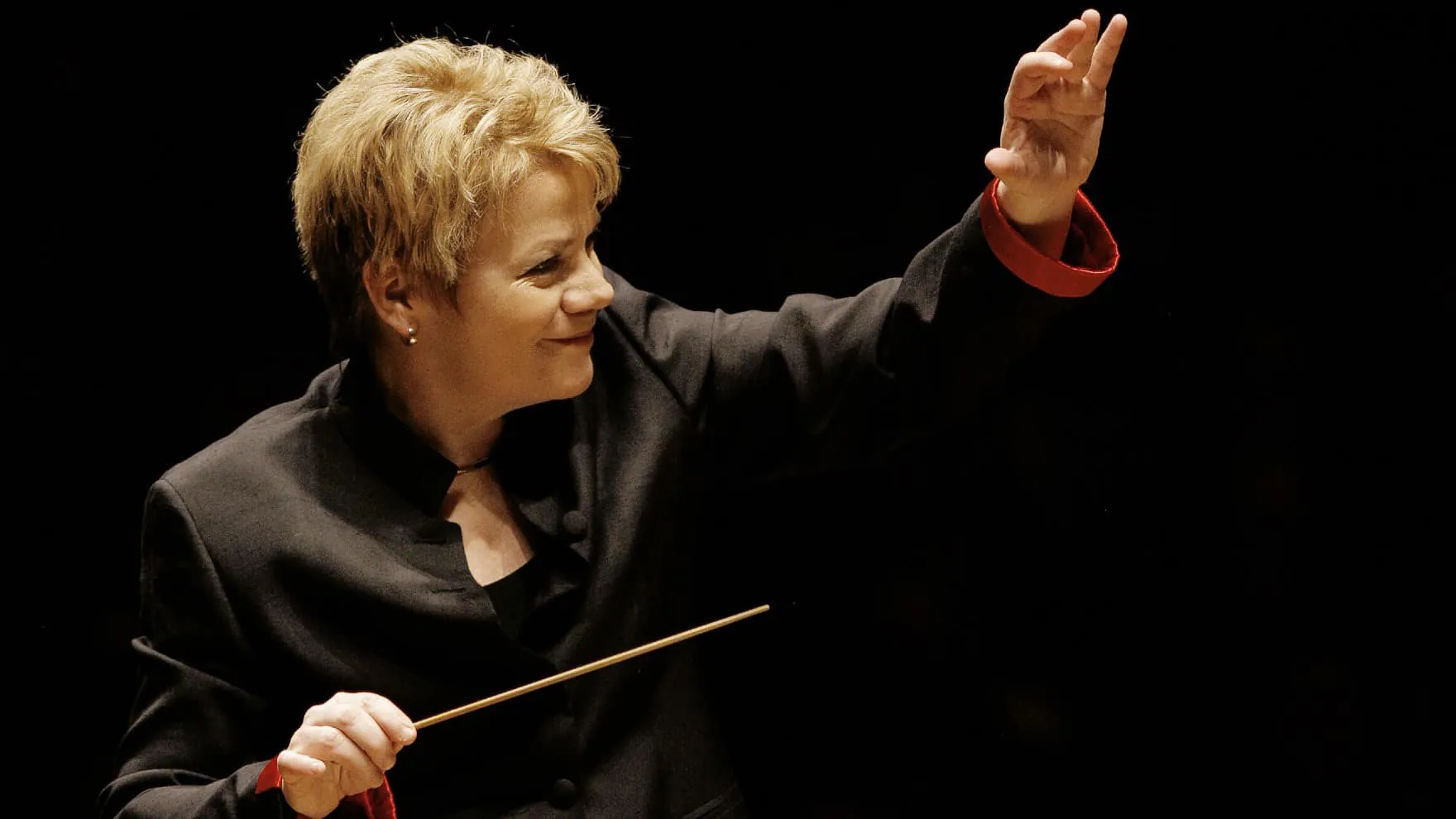
Photo by Grant Leighton.
PIOTR ILYICH TCHAIKOVSKY
Romeo and Juliet Fantasy Overture
BORN: May 7, 1840 in Votkinsk, district of Vyatka, Russia
DIED: November 6, 1893, in St. Petersburg
WORK COMPOSED: 1880
WORLD PREMIERE: March 16, 1870, in Moscow, conducted by Nicolai Rubinstein
Piotr Ilyich Tchaikovsky led a tumultuous life marked by periods of nervous exhaustion and melancholy. He showed early signs of musical talent, but it was not until the Saint Petersburg Conservatory was founded in 1862 that Tchaikovsky would receive formal training in the Western European classical canon. This training set him apart from the group of Russian nationalist composers, including Mily Balakirev, who aimed to create a distinctly Russian style of music. Tchaikovsky eventually forged his own approach that pulled from both traditions, creating a voice that was intensely personal and unmistakably Russian.
Despite Tchaikovsky’s differing views, Balakirev supported his career and suggested he write an overture based on William Shakespeare’s tragedy, Romeo and Juliet, going so far as to propose key signatures and thematic ideas. Tchaikovsky willingly took the advice, sharing his progress with Balakirev and eventually dedicating the work to him. The overture underwent multiple revisions; the final and most often performed version was completed 10 years after the first draft.
Tchaikovsky’s Romeo and Juliet Fantasy Overture shares its inspiration with Sergei Prokofiev’s Romeo and Juliet full-length ballet and orchestral suites, and both have found a lasting place in cinema and television soundtracks. Tchaikovsky’s iconic love theme has been quoted so often as to become a comedic device in films, television shows and even video games (e.g. Spongebob Squarepants, The Simpsons, The Sims), and its original intent is often flavored by that kind of usage in the public consciousness. This most famous part of the Overture doesn’t appear until nearly halfway through the work, meant to signal the sincere passion and care that Romeo and Juliet have for each other.
The Romeo and Juliet Fantasy Overture begins with a chant-like chorale and upward-reaching phrases that suggest innocent hope. After a slow introduction, an Allegro section illustrates the tensions between the warring families with a martial main theme. This segues into the famous love theme. Here, it is not ironic or silly; it’s tender, cautiously excited and eager for expression. The combination of strings and woodwinds creates a light, elegant texture that refuses to be nailed to the ground. Nothing can contain the dreams Romeo and Juliet have for each other. But that hope can’t last, as more dissonant harmonies and thick textures take precedent, showing the stark contrast between the young people’s perspective and that of their families. Even in this tumultuous section, the love theme makes an emergence a second time, more determined and desperate. It eventually fragments, almost making a comeback before the families’ antagonistic theme interjects. The fragmentation continues, this time in a minor key; the opening figure of the love theme started but never completed, a solemn procession of poignant loss.
Catherine Case & A. Kori Hill © 2023
LEONARD BERNSTEIN
Symphonic Dances from West Side Story
BORN: August 25, 1918, Lawrence, Massachusetts
DIED: October 14, 1990, The Dakota, New York, New York
WORK COMPOSED: 1955–1957, musical; 1961 Symphonic Dances
WORLD PREMIERE: The musical premiered on August 19, 1957, at the National Theatre in Washington, D.C.; the Symphonic Dances were first performed on February 13, 1961, with Lukas Foss conducting the New York Philharmonic at Carnegie Hall, in a pension fund gala concert titled “A Valentine for Leonard Bernstein.”
Leonard Bernstein’s West Side Story challenges its source material in popularity and recognition. Inspired by Shakespeare’s classic take on star-crossed lovers, Bernstein’s musical set a new precedent for American musical theater; highlighted American music’s multi-stylistic roots; and gave lovers of musicals, film, and orchestral music a work that does nothing less than inspire and invigorate both those who listen to it and those who perform it.
The seeds of West Side Story were planted in 1949, when Bernstein, choreographer Jerome Robbins and librettist Arthur Laurents sought to retell Romeo and Juliet amid the urban tensions of New York City. The original plot (Jewish girl falls for Catholic boy) and title (East Side City) was ultimately changed, its focus shifting to gang conflicts between Puerto Rican and white youths — the Sharks and the Jets — and how poverty and racism can create enemies out of potential allies. West Side Story, with lyrics by a young man name Stephen Sondheim, told the tale of Maria — a Puerto Rican girl and sister of the Sharks’ leader, Bernardo, who falls in love with Tony; the son of poor Polish immigrants is aiming for the straight and narrow, but he’s still tied up in the problems of the Jets, led by his best friend, Riff. Unlike Juliet, Maria survives, but Tony is felled by a bullet in retribution for the death of Maria’s brother.
Following its successful Broadway debut in 1957, West Side Story was adapted into a film in 1961. It was a critical and financial success, winning 10 Oscars and grossing more than $40 million. That year also marked the creation of Symphonic Dances from West Side Story for a New York Philharmonic fundraiser (Bernstein was the New York Phil’s music director from 1958 to 1969). While Bernstein oversaw the orchestration, the work was carried out by Sid Ramin and Irwin Kostal; the Symphonic Dances are dedicated “To Sid Ramin, in friendship.” To belt out “Ma–ri–a,” to snap your fingers in a certain rhythm, became and remain a powerful synecdoche for a composition that explores the possibilities and limitations of the American dream, forgiveness and love.
The Symphonic Dances from West Side Story give listeners a story in miniature. If you know the work, you can fill in the gaps; if this is your first time hearing it, it piques your interest in the rest. Prologue— begins with the swagger, anger, arrogance and finger snaps of the Jets as they prepare to defend their territory against the Sharks. But then a gentle theme emerges: Somewhere—, an imagined place where the two groups weren’t enemies but friends, living despite the limits of the world. The Scherzo— that follows is exuberant and care-free, what the lives of these teenagers should be but can’t in the harsh reality they are trying to survive. This leads straight into the antagonistic dance-off, the Mambo—. It is also the scene where Tony and Maria see each other for the first time; in the Cha Cha—, we hear the strains of “Maria” as they dance, followed by the Meeting Scene— as they speak to each other. Cool Fugue— is next as the Jets attempt to manage their frustration and anger, followed by Rumble—, where Bernardo kills Riff and Tony kills Bernardo. Finale signals the tragic conclusion: Tony’s death; Maria’s fury but refusal to continue the cycle of the violence; and the Jets and Sharks finally coming together to mourn.
A. Kori Hill © 2023
SERGEI PROKOFIEV
Suite from Romeo and Juliet
BORN: April 23, 1891, in Sontsivka, Ukraine
DIED: March 5, 1953, in Moscow, Russia
WORK COMPOSED: Ballet, 1935; Suites 1 and 2, 1936; Suite 3, 1946
WORLD PREMIERE: Single-act production premiere December 30, 1938, in the Mahen Theatre, Brno (then in Czechoslovakia, now in the Czech Republic); first Soviet production January 11, 1940, at the Kirov (now Mariinsky) Theatre in Leningrad (now Saint Petersburg).
It may come as a surprise that Sergei Prokofiev’s Romeo and Juliet was initially met with criticism and hostility. First, we must go back to the 1930s, when Prokofiev and his family returned to Russia, having left in the wake of the 1917 Revolution. But it wasn’t the Russia of his youth: this was Stalinist Russia, where creative disagreement could mean ostracism, arrest or even death.
Prokofiev had accepted a commission from the Kirov for a new ballet based on Romeo and Juliet. He and his collaborators, dramaturgs Adrian Piotrovsky and Sergey Radlov, initially planned that the young lovers would survive the action of the play. It was this ‘happy’ ending which officials found impossible. The original, tragic ending would prevail amidst artistic and political controversy during the work’s composition.
Discussions with Kirov fell through, so Prokofiev took the project to the Bolshoi in 1934. Though he completed the ballet in 1935, it didn’t get its premiere for another three years, in Czechoslovakia. The government’s overhaul of the Bolshoi’s artistic administration had pushed back the ballet’s debut in Russia. The Bolshoi would eventually call the work “undanceable,” leading Prokofiev back to the Kirov, which performed the ballet in 1940. This version featured significant revisions, not all approved by the composer.
But Prokofiev did what artists do; he adapted, setting some of the major themes and dramatic moments of the ballet in two orchestral suites that were finished between the ballet’s completion and debut. He would revise the ballet again for the Bolshoi’s 1946 performance, and before his death, had adapted a third suite from the work.
Because of Prokofiev’s musical choices to create three compelling suites, it has become customary for conductors to make their own selections from them. There are moments across the three Suites from Romeo and Juliet that have become part of our public consciousness, like The Montagues and the Capulets from Suite No. 2. The intensity of the brass, martial main theme in the strings, and moments of atmospheric woodwinds highlight the pomposity, boastfulness and tragic foreboding that characterizes the clans’ petty feud. Juliet - the Young Girl and Friar Laurence are brief but evocative character studies from that same suite, conjuring Juliet’s subtle transition from youth to womanhood as well as the rooted, reliable comfort of Friar Laurence.
Between these character studies are moments of narrative action: Scene and Masks both come from Suite No. 1, short, pithy movements that toddle between humorous and formal as people awaken to the new day and Romeo hides his identity at the Capulet’s masked ball. Masks adds a layer of foreboding with the sharp pizzicatos and brassy timbre.
The Death of Tybalt closes Suite No. 1, highlighting Prokofiev’s skillful pairing of virtuosic and lyrical intensity with clear, sparkling textures. Suite No. 3 is the least performed of the three suites, but not due to lack of exciting material. Morning Serenade (Aubade) features a return to the melody from Scene, but with a more dreamlike cast, its distant horn calls and repetitious patterns floating beneath woodwinds and solo violin. This contrasts with the movement that follows in the original order of the third suite (The Death of Juliet). For the Seattle Symphony program, the final movements of Suites 2 and 3 are brought into conversation. Romeo at Juliet’s Grave is a wrenching, painful cry as the young man sees his love “dead.” Since he can’t live without her, he takes poison, only to witness the miracle of Juliet awakening, just in time to hold him as he dies. Having lost him, she refuses to live in a world where he is not and soon joins him. The Death of Juliet is a dirge; and like Romeo at Juliet’s Grave, features melodies from previous, more hopeful moments that evoke Juliet’s maturity, and the love she and Romeo shared before parting.
Whether performed as composed or integrated, these suites provide a window into Prokofiev’s interpretation of a classic tale. Not only about the promise of young love, but how disagreements and dislikes can take on an importance they shouldn’t, leading to doom for all involved.
A. Kori Hill © 2023